

Latest news
A research team led by Professor Zhang Zhiqiang from the School of Soil and Water Conservation has published a significant study titled “Flash droughts threaten global managed forests” in Nature Communications. The research systematically reveals the severe impact of flash droughts on global forests and indicates, for the first time, that certain current management practices may inadvertently increase forest vulnerability to such extreme climate events.
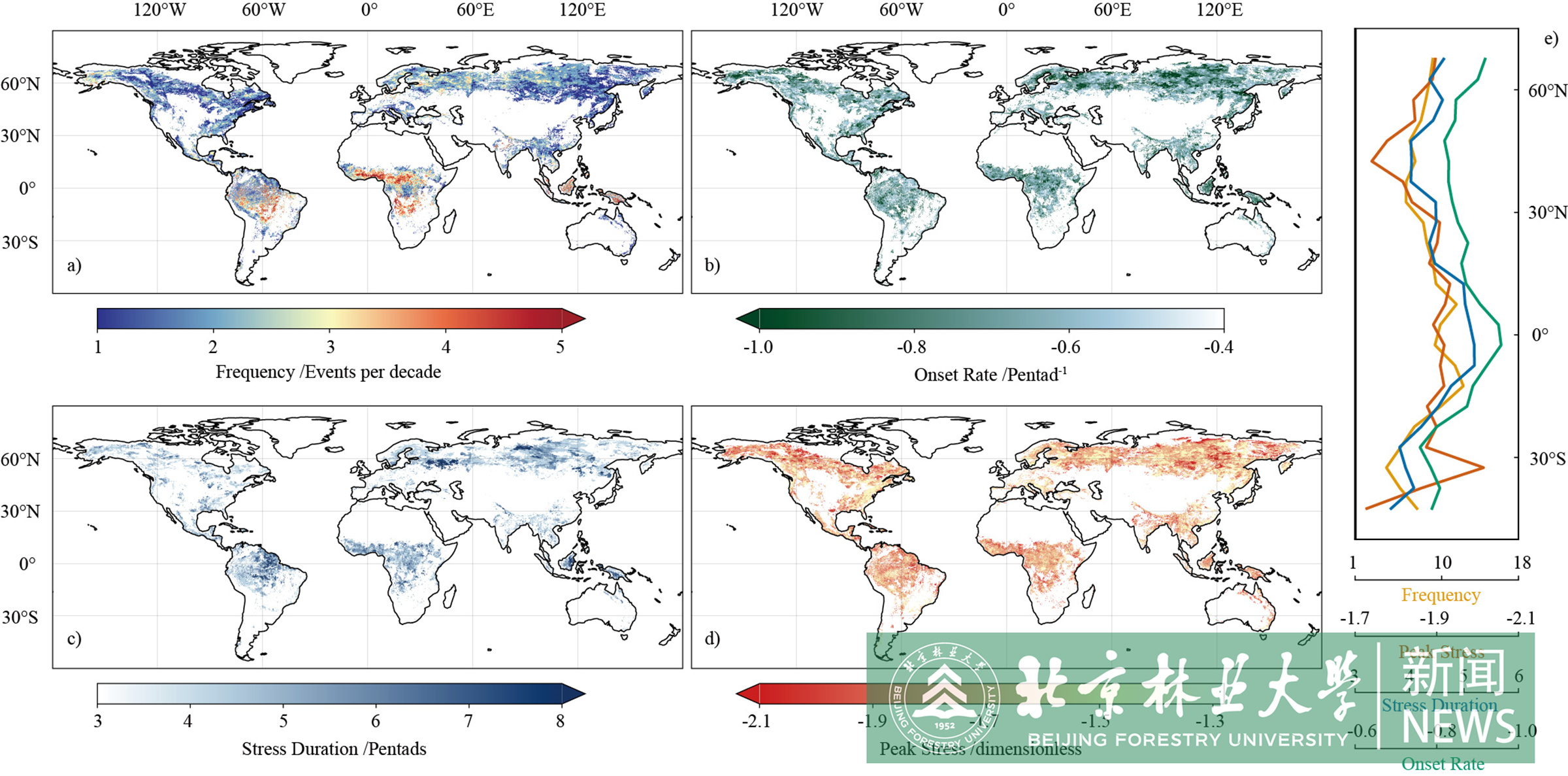
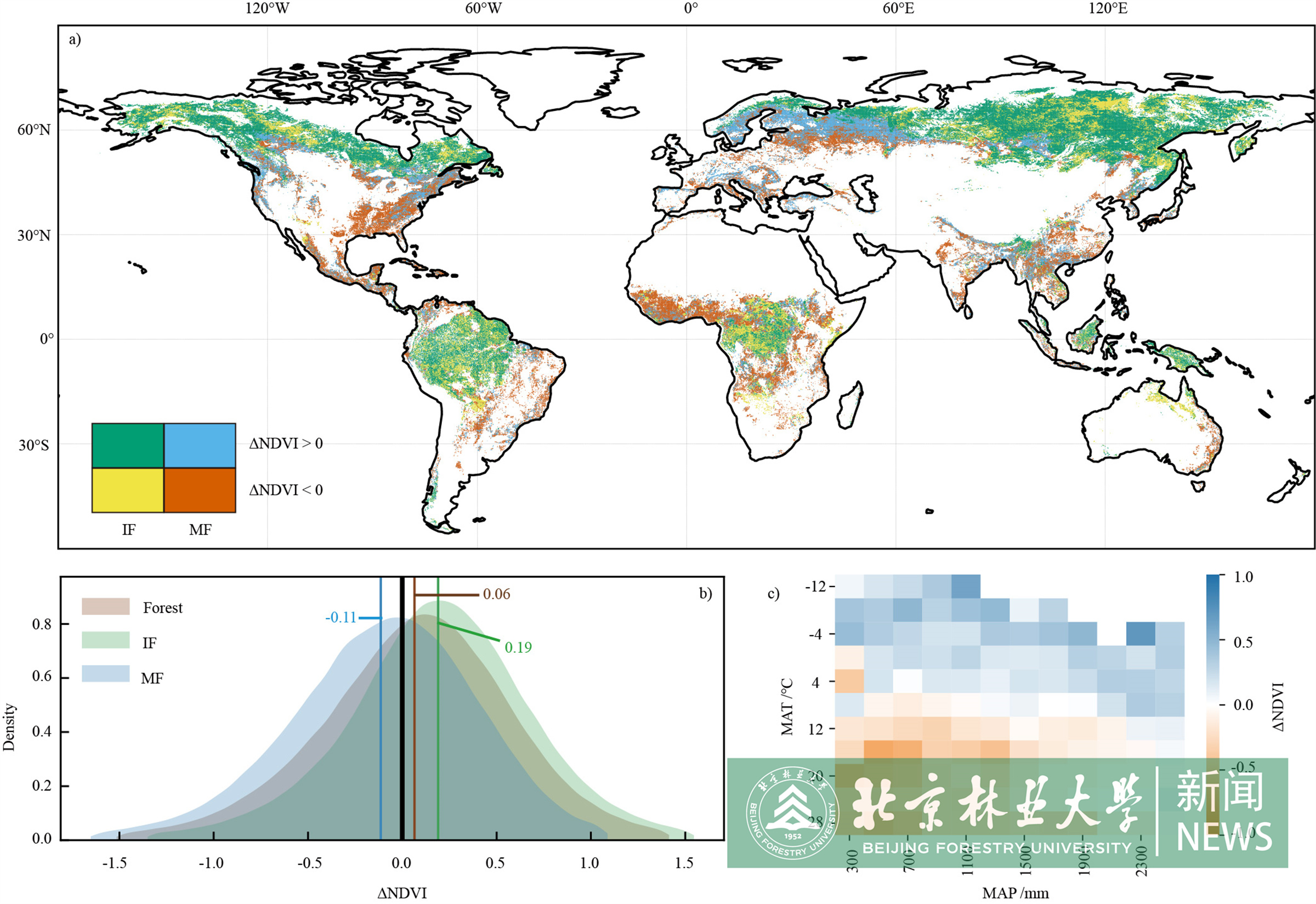
Flash droughts, characterized by rapid onset and increasing frequency, pose significant threats to ecosystem stability and function. However, there remains no global consensus regarding forest responses to flash droughts. Here, using a reconstructed global high spatiotemporal resolution Standardized Precipitation-Evapotranspiration Index dataset and an interpretable machine learning framework, the reasearch team find that global forests have experienced increasingly rapid, intense, and prolonged flash droughts over the past four decades. Managed forests are more prone to browning from flash droughts than intact forests due to their limited capacity to acclimate to rapid drought stress driven by extreme heat. Notably, the meta-analysis confirms that current forest management practices, designed to maximize ecosystem services, exacerbate the vulnerability of managed forests to flash droughts globally. The findings highlight the escalating risks posed by increasingly frequent and prolonged flash droughts to managed forests, underscoring the urgent need to integrate resistance and resilience to extreme climatic events into forest management strategies.
The paper lists Beijing Forestry University as the signature unit. Doctoral student Pang Jianzhuang is the first author, with Associate Professor Xu Hang and Professor Zhang Zhiqiang serving as co-corresponding authors. The research team also included Lecturer Xu Yang, recent PhD graduate Zhang Yifan, doctoral candidate Wu Xiaoyun, and master's student Li Kexin.
This study was supported by the National Key Research and Development Program of China (Grant No. 2022YFF1302501; Z.Q.Z.), the Fundamental Research Funds for the Central Universities (Grant No. JCYJ202507; H.X.), the National Natural Science Foundation of China (Grant Nos. 32301664; H.X. and 32271967; Z.Q.Z.) and the Young Elite Scientist Sponsorship Program by Cast (Grant No. YESS20230091; H.X.).
Paper link: https://doi.org/10.1038/s41467-025-66021-2
Written by Pang Jianzhuang, Xu Xing
Translated and edited by Song He
Reviewed by Yu Yangyang