


Latest news
A research team led by Associate Professor Xu Yiming from the College of Grassland Science has published a study in the Journal of Environmental Management (IF=8.4), proposing a novel framework for assessing grassland carrying capacity that integrates forage nutritional quality and the ecological demands of wild ungulates.The research provides a scientific basis for sustainable grazing management in the Changtang Nature Reserve on the Qinghai-Tibetan Plateau.
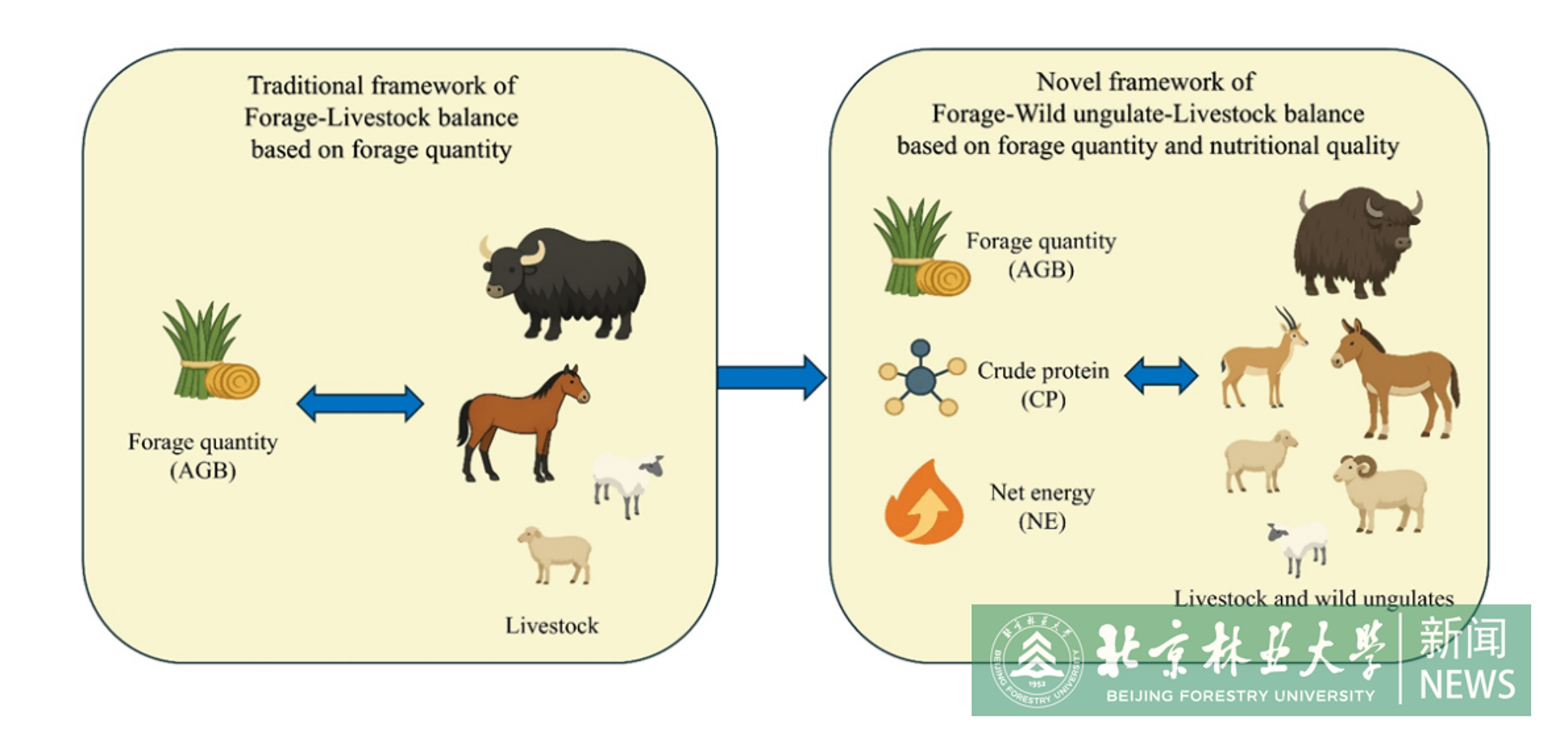
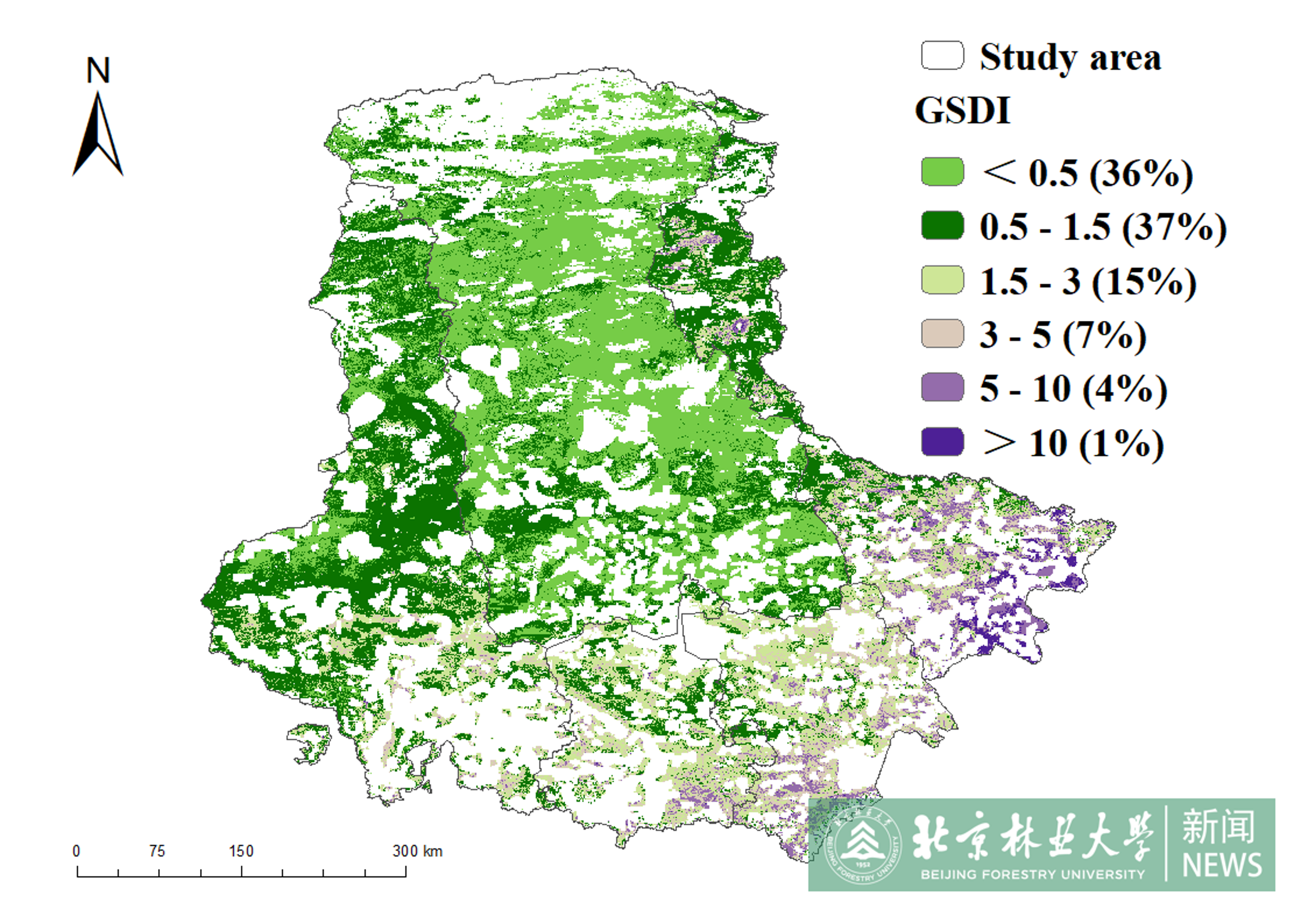
Accurate quantification of the grassland carrying capacity (GCC) is important to guide the sustainable grassland management. However, few studies have estimated the GCC in consideration of forage nutritional quality and wild ungulate population in the grasslands of nature reserves. Based on the field sampling and laboratory analysis, we established spatial prediction models of grassland aboveground biomass (AGB), crude protein (CP), and net energy (NE) based on machine learning methods, and predicted the spatial pattern of grassland theoretical carrying capacity (TCC) based on these models in Changtang Nature Reserve (CNR) on the Qinghai-Tibetan Plateau. The study concluded that vegetation indices, evapotranspiration and soil total nitrogen were the most important variables in affecting forage quantity, nutritional quality, and the TCC. The TCC incorporating forage quantity (AGB) and nutritional quality (CP and NE) showed a spatial pattern decreasing from south to north. By incorporating TCC and practical carrying capacity (PCC) based on livestock/wild ungulate population, we built a novel grassland supply and demand index (GSDI), which considered the balance between the grassland supply and livestock/wild ungulates requirement of forage quantity and nutritional quality. The results of this study showed that 36%, 37%, and 27% of the CNR were in the state of undergrazed, balanced, and overgrazed, respectively. The framework in this research can quantify the balance between the forage quantity and nutritional quality supplied by the grasslands and demanded by the livestock/wild ungulates. This framework has potential to be promoted in the grasslands of other nature reserves around the world.
Master's student Che Yunling is the first author, with Associate Professor Xu Yiming serving as the corresponding author. This study was financially supported by National Key Research and Development Program of China (2023YFF1304303) and the National Natural Science Foundation of China (No. 42001107 and No.32361143870).
Paper link: https://www.sciencedirect.com/science/article/abs/pii/S0301479726002641
Written by Xu Yiming
Translated and edited by Song He
Reviewed by Yu Yangyang


