

Latest news
A research team led by Professor Dong Shikui from the College of Grassland Science at Beijing Forestry University has published a study in Functional Ecology that sheds light on how a dominant alpine meadow species adjusts its functional traits and trait coordination in response to different levels of nitrogen deposition. The findings offer important insights for predicting and managing the ecological impacts of nitrogen enrichment on alpine grasslands.
Nitrogen (N) deposition significantly impacts plant functional traits in alpine meadows, yet the adaptive strategies of dominant species remain unclear. Understanding these strategies is crucial for predicting alpine grassland vegetation changes and ecosystem functioning under increasing N enrichment. However, little is known about how different levels of N deposition affect the eco-physiological responses of key species in alpine environments.
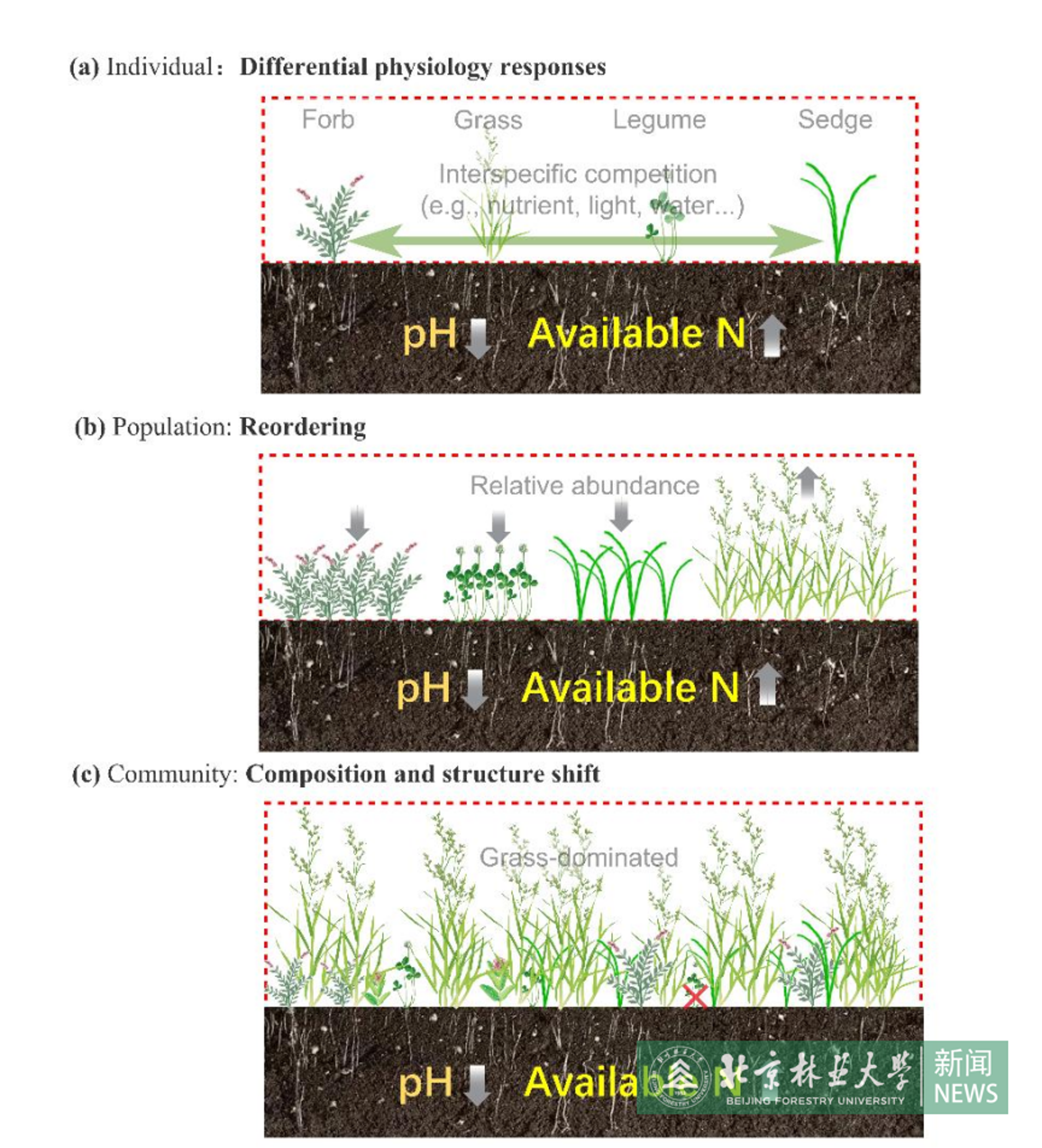
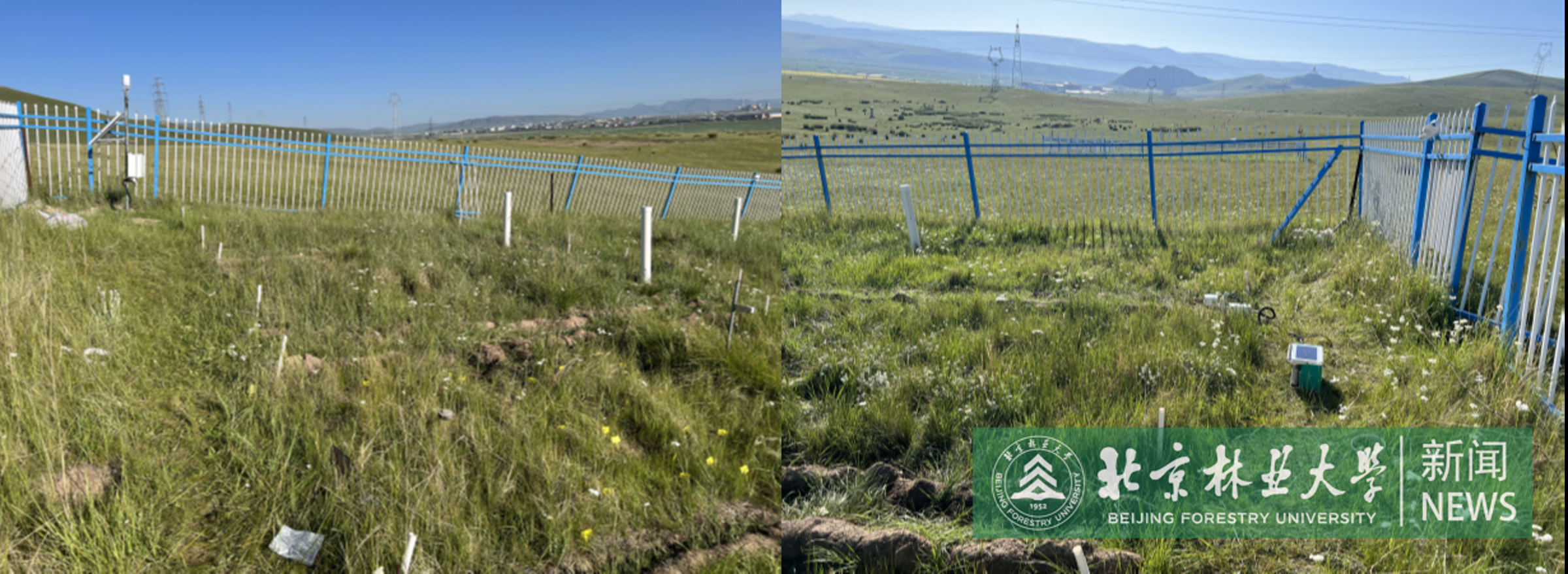
The research team conducted a field experiment in an alpine meadow on the Qinghai-Tibetan Plateau to examine how the dominant grass Leymus secalinus adjusts leaf structure, physiology and carbon-nutrient allocation under simulated N deposition. Three N addition levels (0, 8, 72 kg N ha−1 year−1) were applied, and multiple plant eco-physiological traits including leaf anatomical traits, morphological traits, photosynthetic traits and nitrogen and carbon traits were measured to quantify shifts in trait coordination under different N addition levels.
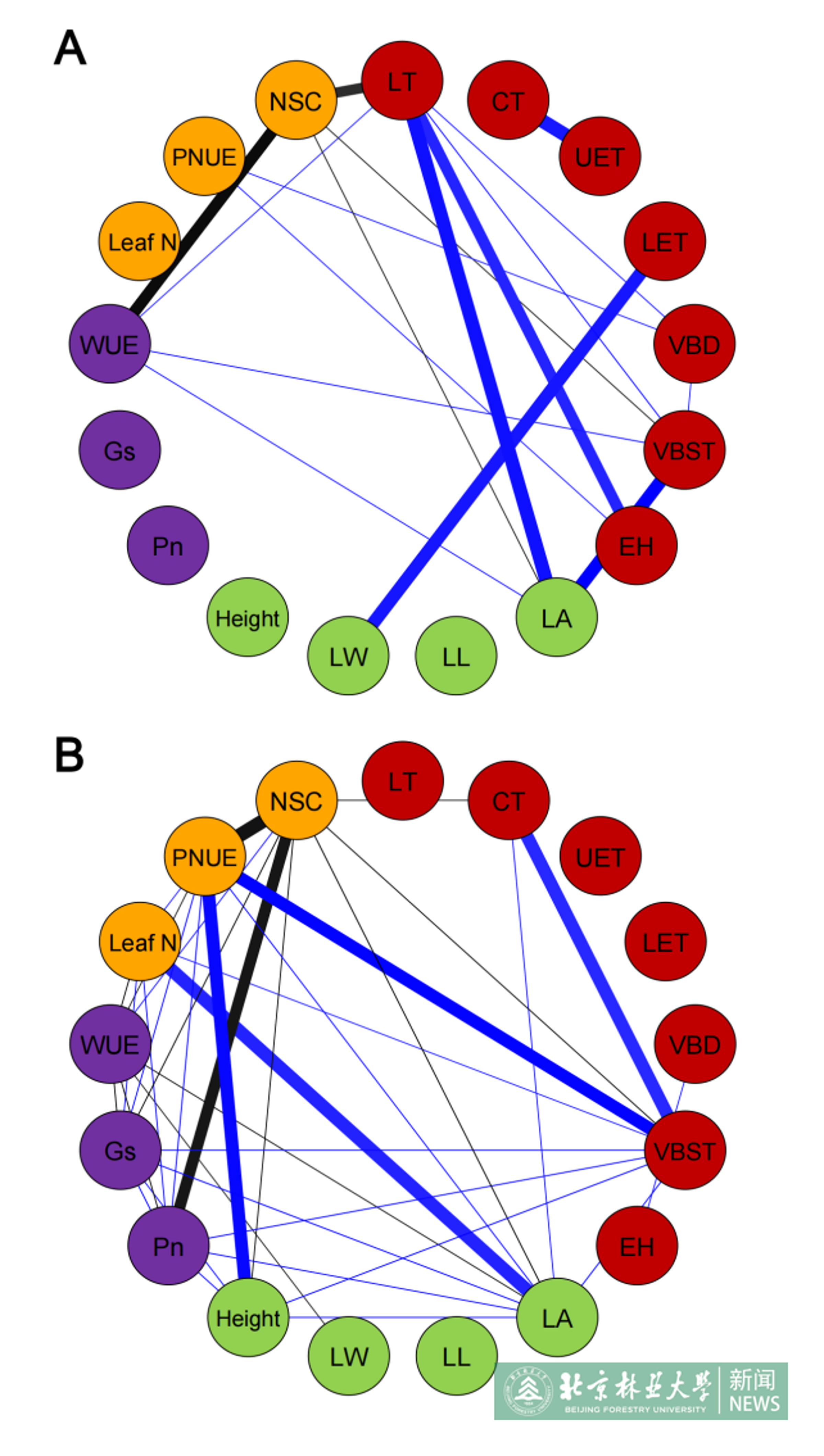
Low N addition (8 kg N ha−1 year−1) induced significant positive responses in leaf thickness, cuticle thickness, vascular bundle sheath thickness, leaf area (LA) and water-use efficiency (WUE), while high N addition (72 kg N ha−1 year−1) enhanced net photosynthetic rate (Pn), stomatal conductance (Gs), plant height, LA and leaf N content. Non-structural carbohydrate content decreased under both N levels, while WUE decreased under high N addition. Principal component analysis revealed nitrogen-dependent shifts in trait coordination, with anatomical and morphological traits governing plant responses under low N addition, in contrast to physiological traits that predominated under high N addition. In addition, correlation networks showed increased trait connectivity and integration under high N addition.
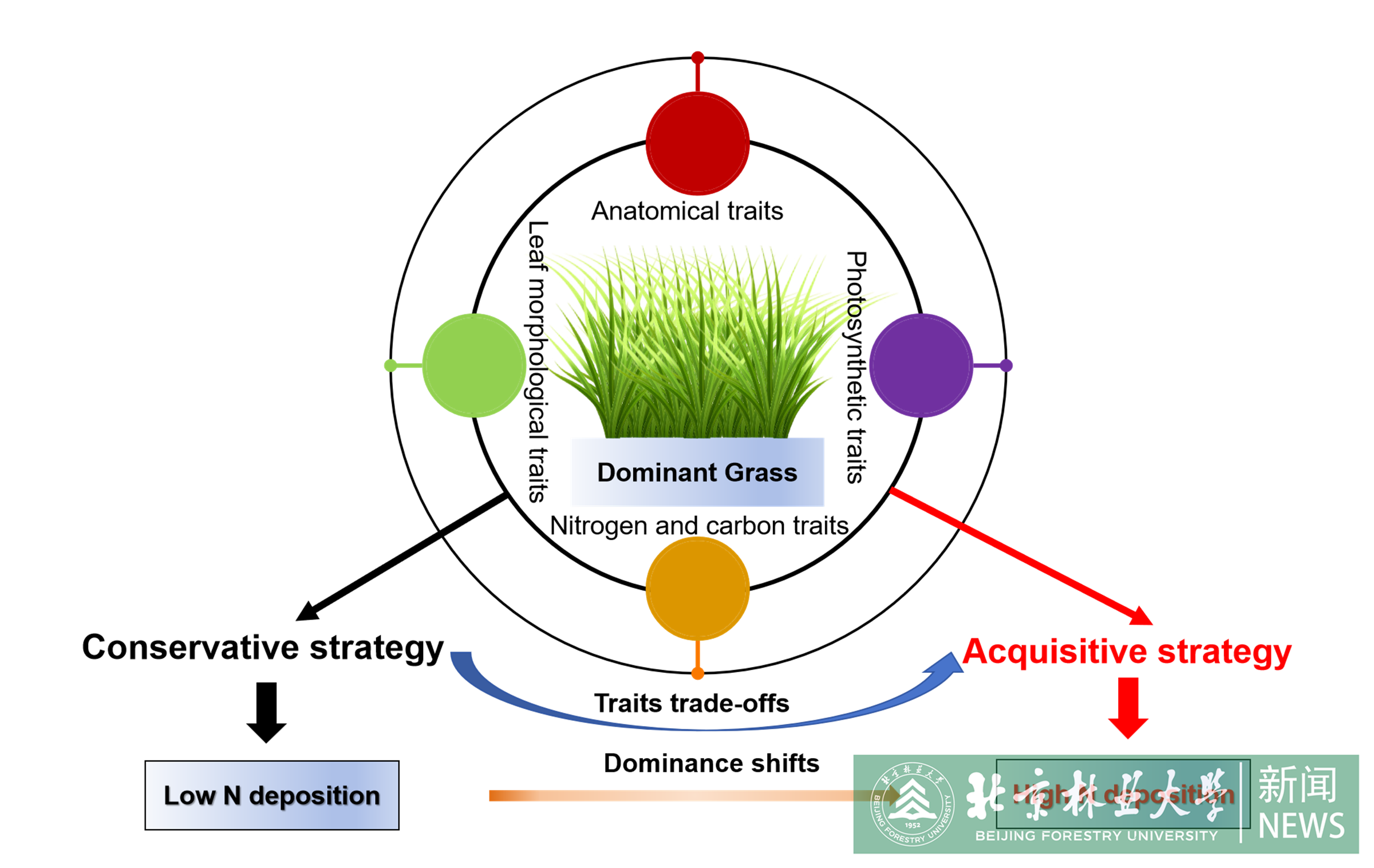
The study suggests that L. secalinus employs contrasting adaptation strategies along a conservative-acquisitive continuum: a conservative, structure-focused approach under low N deposition and an acquisitive, growth-oriented strategy under high N deposition. The observed trait plasticity in both trait values and trait coordination likely contributes to this species' dominance under high N deposition. These results highlight the importance of considering N deposition intensity and trait coordination when predicting plant functional changes and ecosystem responses to ongoing N enrichment in alpine grassland ecosystems.
The first author is Associate Professor Shen Hao from the College of Grassland Science, with Professor Dong Shikui serving as the corresponding author. This study was funded by the National Natural Science Foundation of China (32401291; 32361143870) and the National Key Research and Development Program of China (2023YFF1304303).
Paper link: https://doi.org/10.1111/1365-2435.70362
Written by Shen Hao
Translated and edited by Song He
Reviewed by Yu Yangyang