



Latest news
A research team led by Professor Wang Qiang from the Collge of Environmental Science and Engineering at Beijing Forestry University has published a comprehensive review paper in Chemical Reviews (IF=55.8), a top-tier journal in chemistry. The review, titled "Dual Metal Atomic Site Catalysts for CO₂ Reduction Reactions", systematically summarizes recent progress and future directions in using dual-metal atomic site (DMAS) catalysts for carbon dioxide reduction.
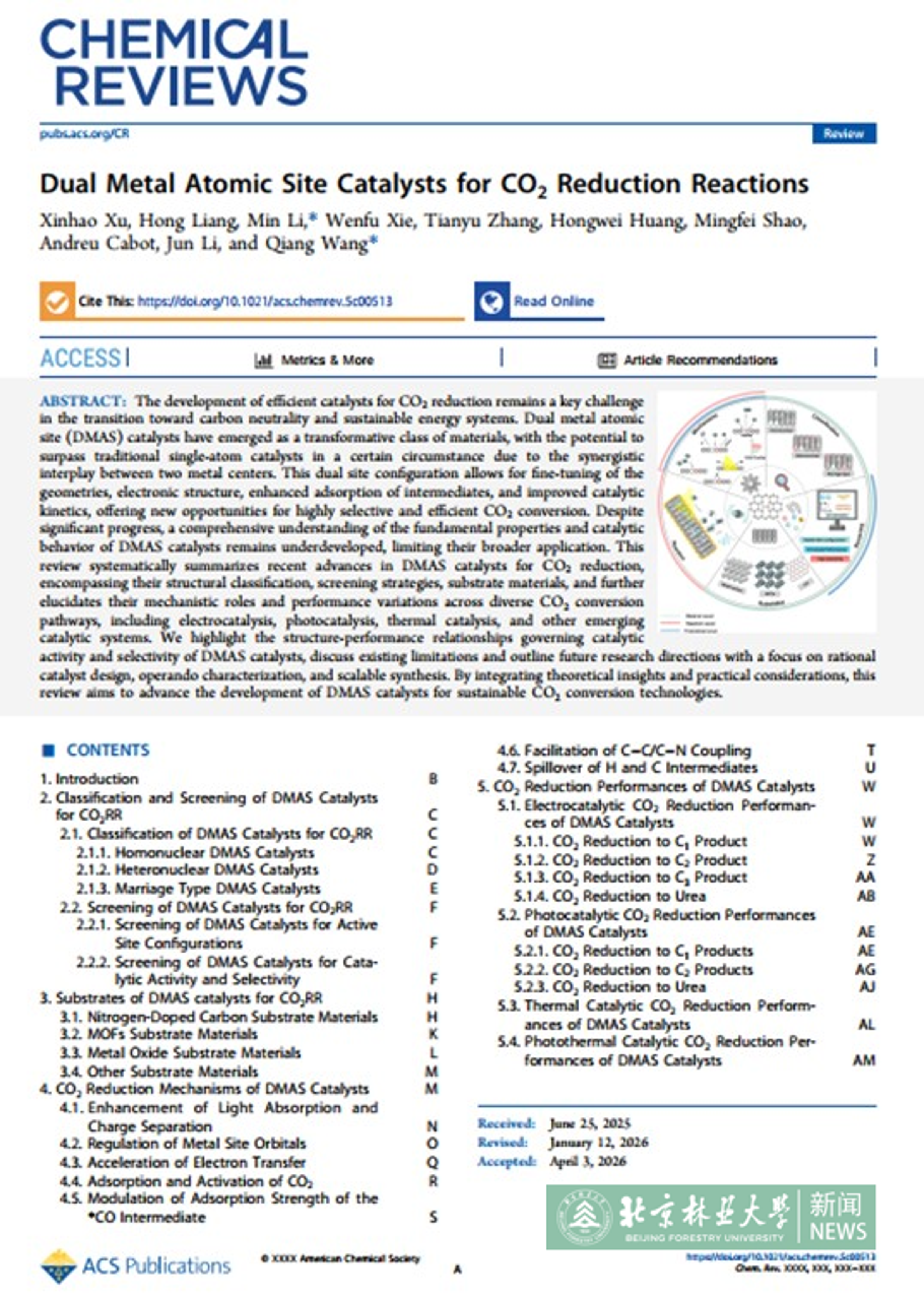
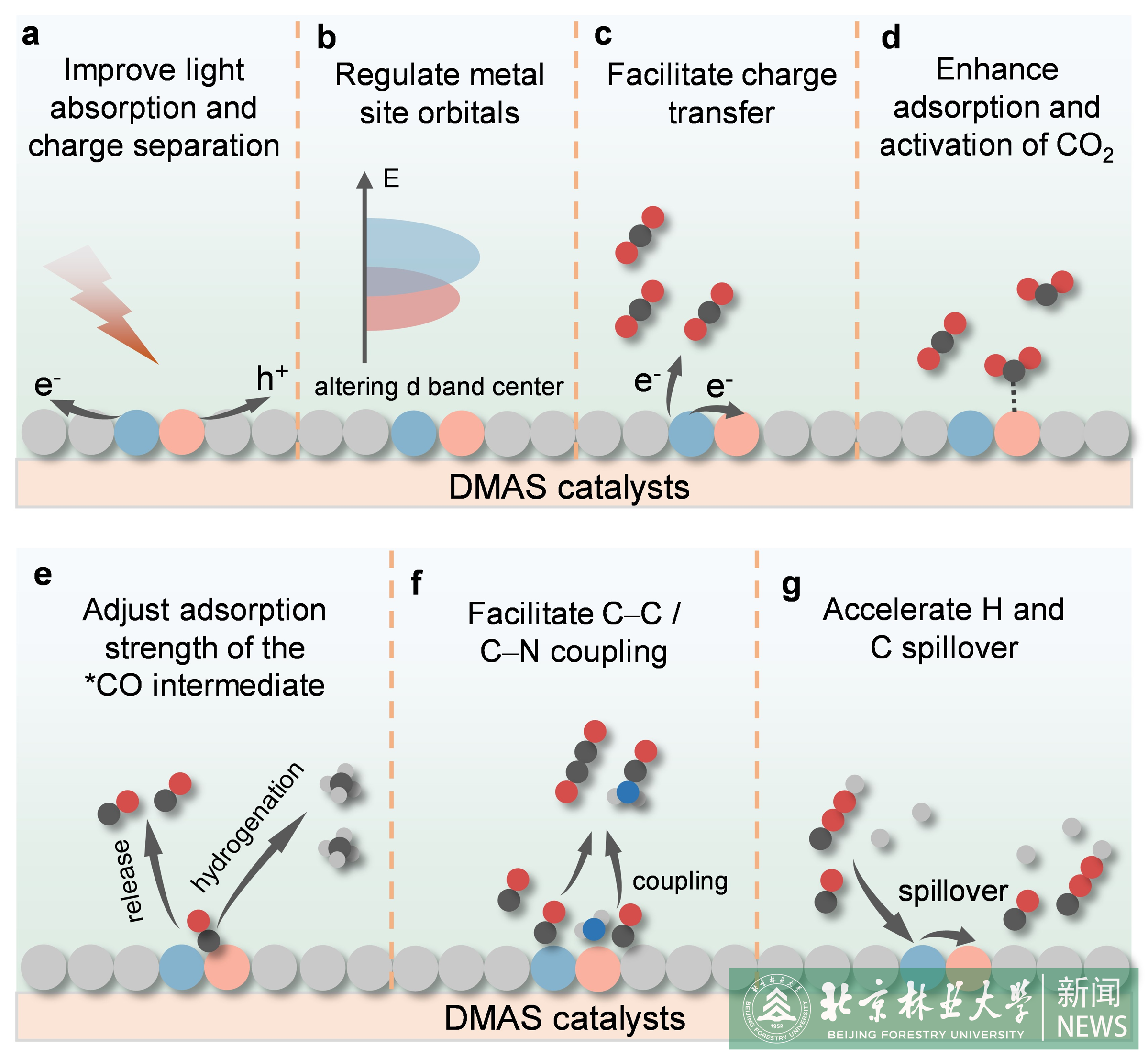
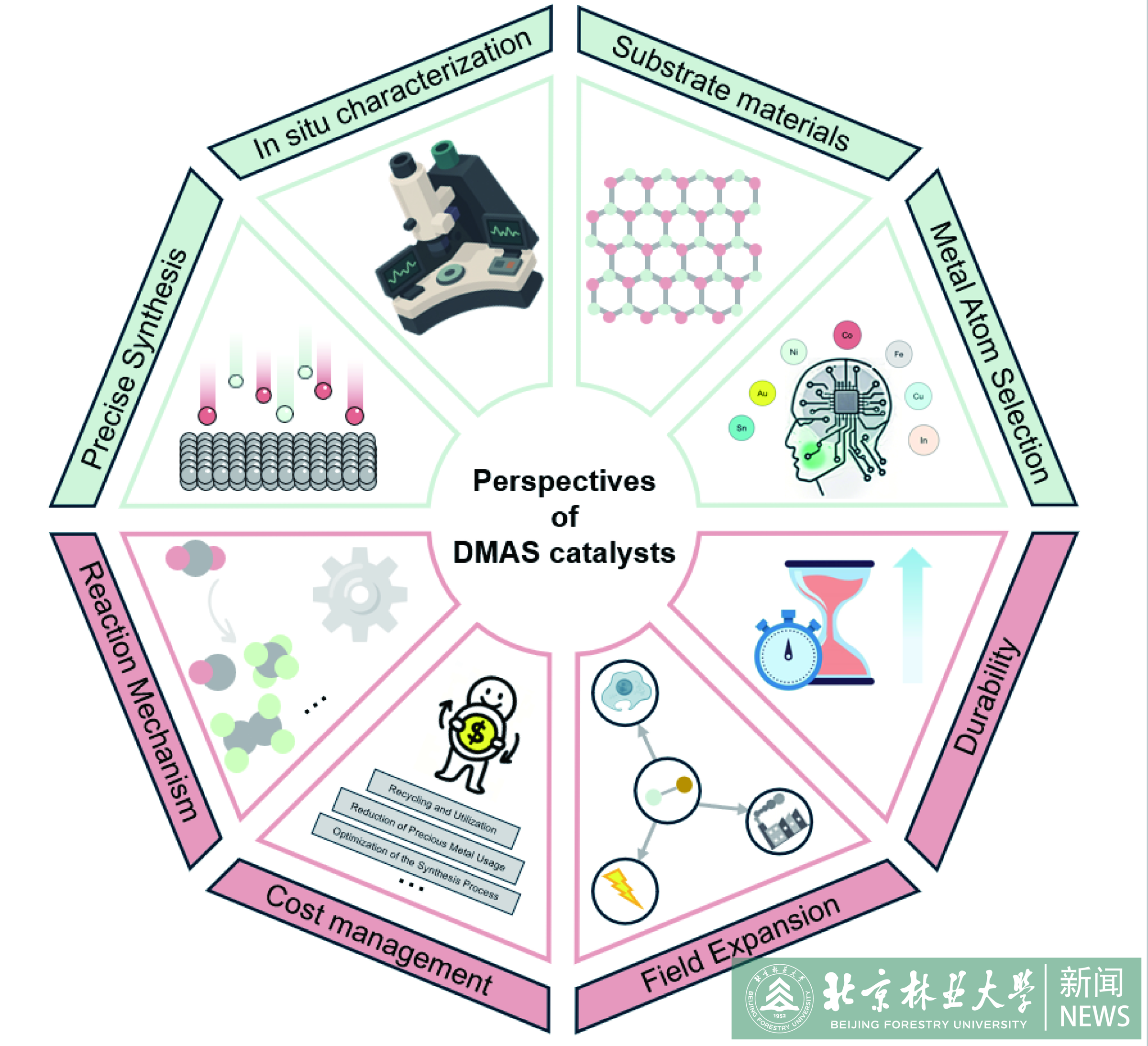
The development of efficient catalysts for CO₂ reduction remains a key challenge in the transition toward carbon neutrality and sustainable energy systems. Dual metal atomic site (DMAS) catalysts have emerged as a transformative class of materials, with the potential to surpass traditional single-atom catalysts in a certain circumstance due to the synergistic interplay between two metal centers. This dual site configuration allows for fine-tuning of the geometries, electronic structure, enhanced adsorption of intermediates, and improved catalytic kinetics, offering new opportunities for highly selective and efficient CO₂ conversion. Despite significant progress, a comprehensive understanding of the fundamental properties and catalytic behavior of DMAS catalysts remains underdeveloped, limiting their broader application. This review systematically summarizes recent advances in DMAS catalysts for CO2 reduction, encompassing their structural classification, screening strategies, substrate materials, and further elucidates their mechanistic roles and performance variations across diverse CO₂ conversion pathways, including electrocatalysis, photocatalysis, thermal catalysis, and other emerging catalytic systems. We highlight the structure-performance relationships governing catalytic activity and selectivity of DMAS catalysts, discuss existing limitations and outline future research directions with a focus on rational catalyst design, operando characterization, and scalable synthesis. By integrating theoretical insights and practical considerations, this review aims to advance the development of DMAS catalysts for sustainable CO₂ conversion technologies.
The first author is Xu Xinhao, a master's student at the College of Environmental Science and Engineering, with Associate Professor Li Min and Professor Wang Qiang as co‑corresponding authors. The research was supported by the National Natural Science Foundation of China, the Fundamental Research Funds for the Central Universities, BFU's "5·5 Engineering" Research Innovation Team Project, and other funding sources.
Paper link: http://pubs.acs.org/doi/abs/10.1021/acs.chemrev.5c00513
Written by Li Min
Translated and edited by Song He
Reviewed by Yu Yangyang


