



Latest news
A research team led by Professor Xu Feng from the College of Materials Science and Technology at Beijing Forestry University has published a comprehensive review in the top‑tier journal Progress in Polymer Science (IF=26.1), summarizing recent advances in understanding the molecular interactions between lignin and carbohydrates. The paper, titled "Revealing the Molecular Interactions between Lignin and Carbohydrates towards Improved Lignocellulose Utilization", provides critical insights for overcoming the inherent recalcitrance of lignocellulosic biomass and improving its conversion efficiency.
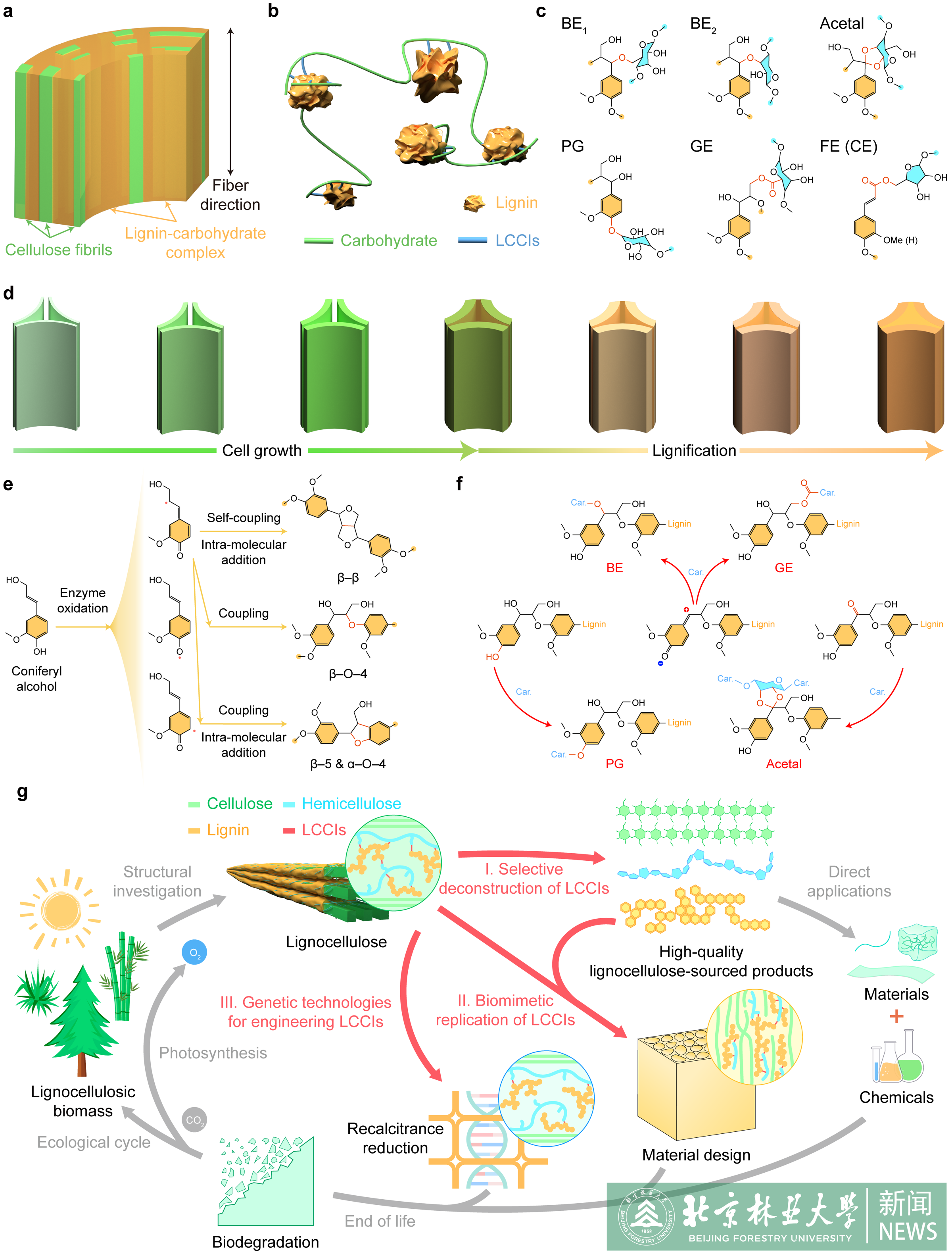
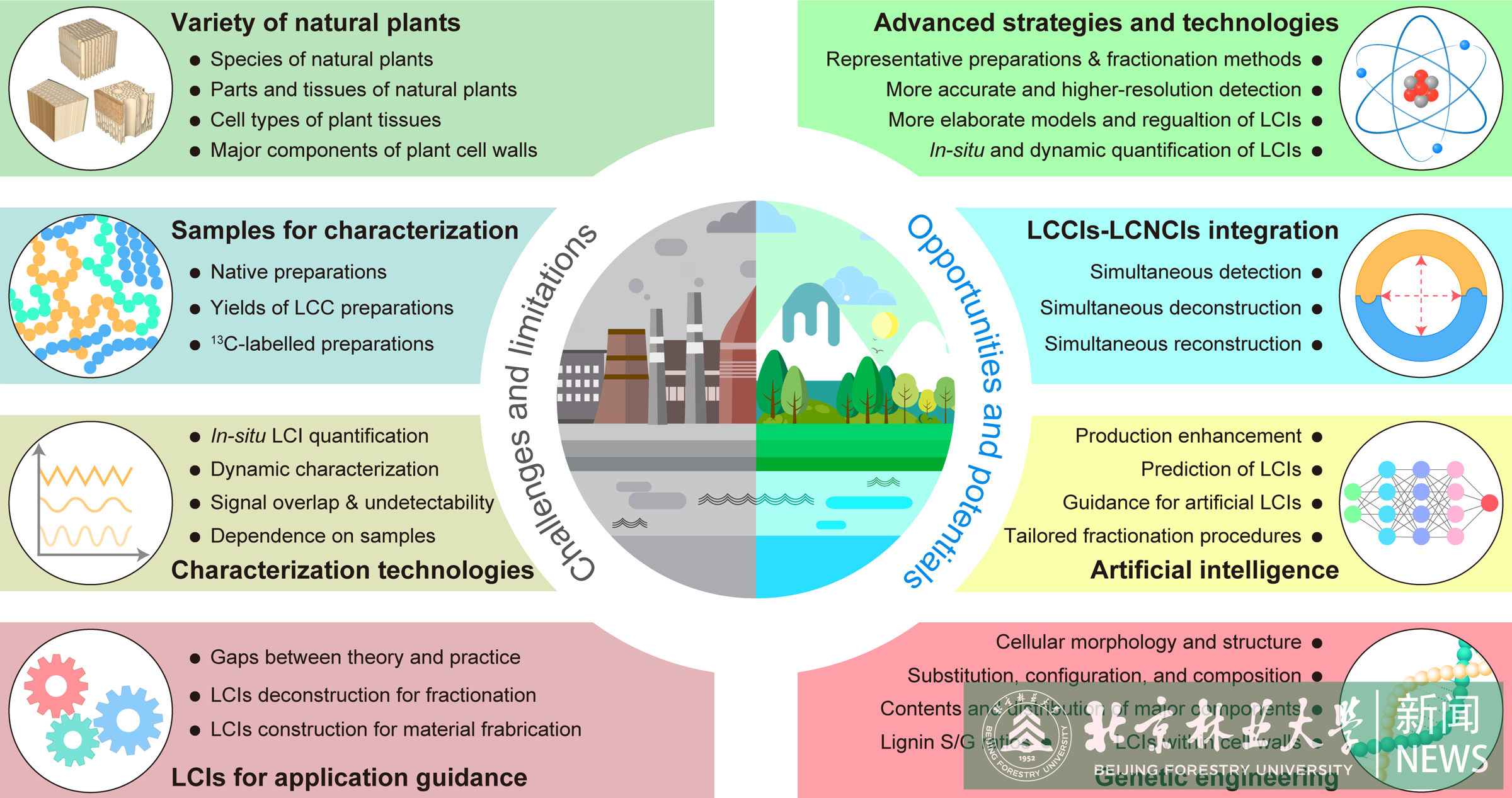
Amid growing concerns about dwindling fossil fuel reserves, the development and utilization of sustainable resources have emerged as urgent global priorities. Lignocellulosic biomass, primarily composed of lignin and carbohydrates, holds great promise as a renewable feedstock for the production of bio-based chemicals, fuels, and materials, thereby reducing the reliance on fossil fuels. However, extensive lignin-carbohydrate interactions (LCIs) significantly contribute to the recalcitrance of lignocellulosic biomass, obstructing its efficient fractionation and conversion. Understanding these interactions is critical to comprehensively grasping the mechanisms of intrinsic recalcitrance and formulating strategies to overcome it. In this review, the researchers present an in-depth overview of LCIs, emphasizing the importance of elucidating these interactions to enhance lignocellulose utilization. Unlike previous reviews, the team explore both lignin-carbohydrate covalent interactions (LCCIs)—including benzyl ether (BE), γ-ester (GE), and phenyl glycoside (PG) linkages—and lignin-carbohydrate non-covalent interactions (LCNCIs), such as those between lignin and cellulose, as well as lignin and hemicellulose. In addition, methods for modulating both LCNCIs and LCCIs are discussed to improve lignocellulose utilization. Lastly, this review identifies existing challenges and future opportunities in uncovering LCIs, aiming to guide research towards a more comprehensive understanding of the LCI network. The goal is to assist in unleashing the full potential of lignocellulosic biomass across diverse fields, while promoting efficient, environmentally sustainable, and economically viable applications. This review will catalyze deeper scientific engagement with LCIs and inspire innovative strategies for the optimal utilization of lignocellulosic biomass.
The co-first authors are Yu Shixu, a Ph.D. student since 2024, and Hu Yucheng, a Ph.D. student since 2022, both from the College of Materials Science and Technology. Professor Xu Feng and Associate Professor You Tingting serve as co-corresponding authors.
The work was supported by the National Natural Science Foundation of China(U22A20422, 22178028, 22378025), the Program of Introducing Talents of Discipline to Universities (Project 111, B21022), and 5·5 Engineering Research & Innovation Team Project of Beijing Forestry University (No: BLRC2023B01).
Paper link: https://doi.org/10.1016/j.progpolymsci.2025.102070
Written by You Tingting
Translated and edited by Song He
Reviewed by Yu Yangyang


