



Latest news
Researchers from the College of Forestry, Beijing Forestry University, have published a study in Journal of Applied Ecology (IF=5.3), the flagship journal of the British Ecological Society. The work investigates logging’s impacts on forest productivity and biodiversity in temperate natural forests, delivering quantitative guidance to balance timber extraction and ecosystem conservation.
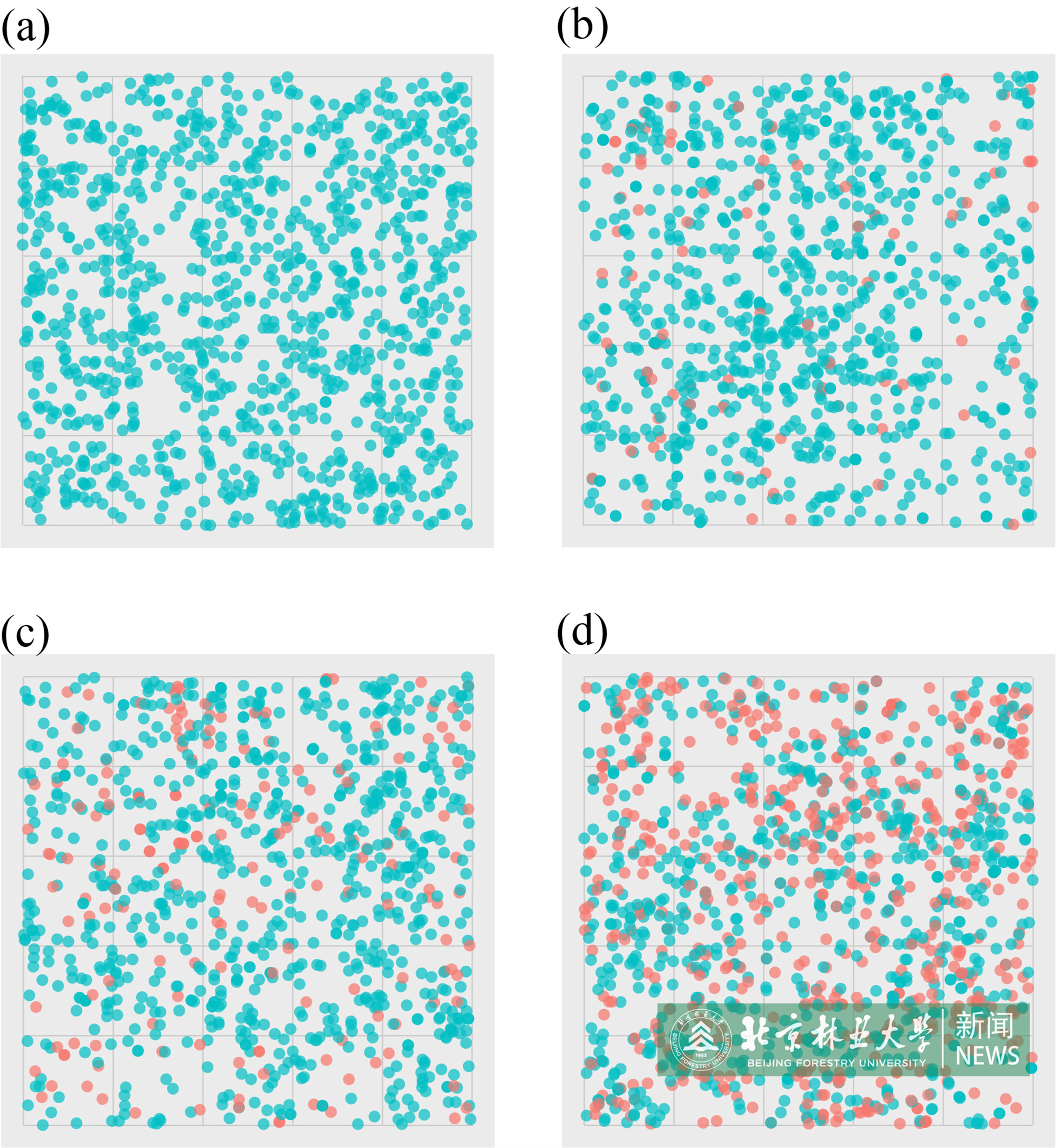
Understanding how logging affects forest ecosystems, especially the balance between timber production and biodiversity conservation, is central to sustainable ecosystem management under increasing global timber demand and accelerating biodiversity loss. Based on observations from stem-mapped natural forest plots under different logging intensities in a temperate forest in Northeastern China, we assessed the relative contributions of niche complementarity, mass-ratio and vegetation quantity effects on forest productivity and explored whether forests can maintain relatively high biodiversity and productivity under moderate timber extraction.
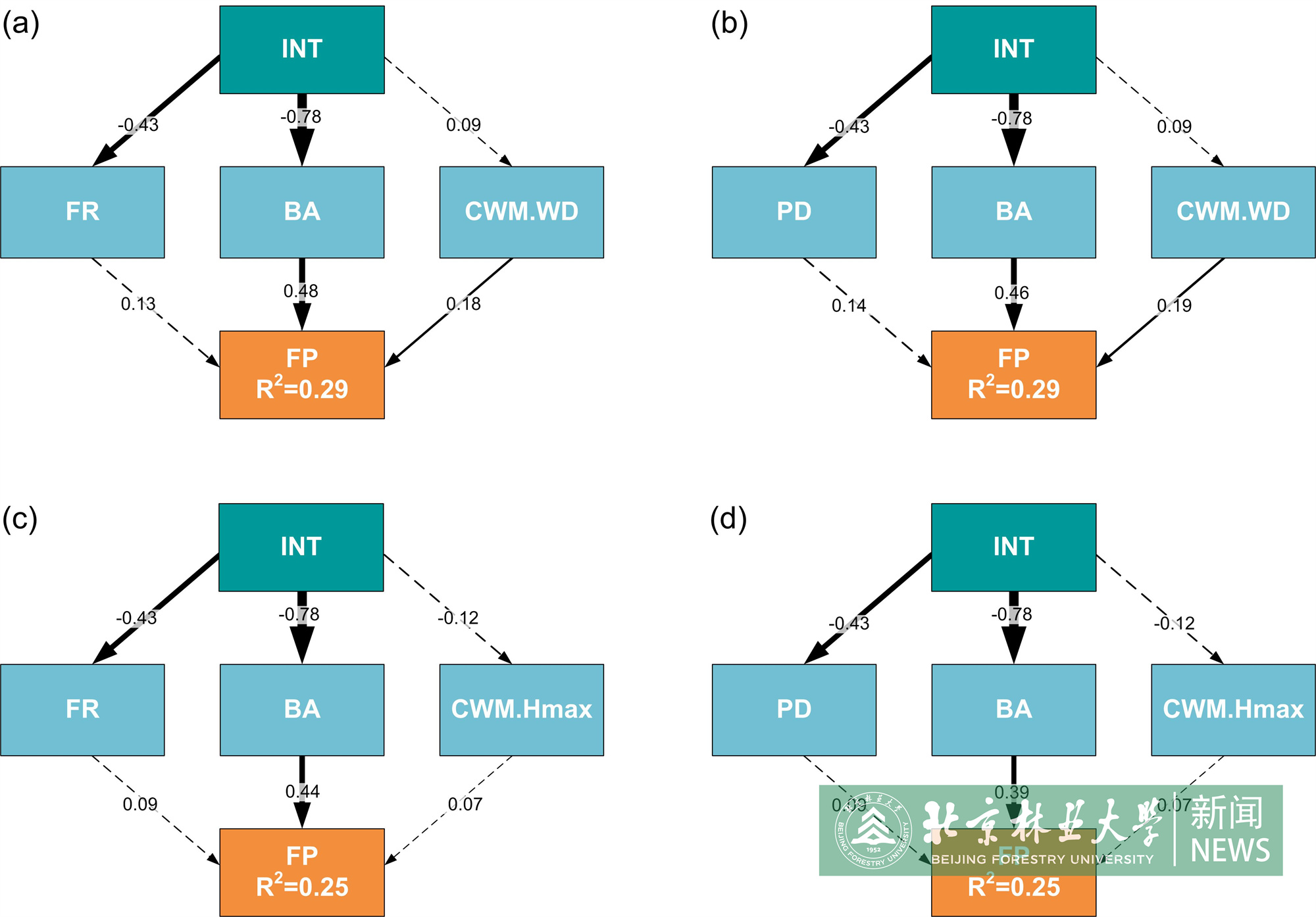
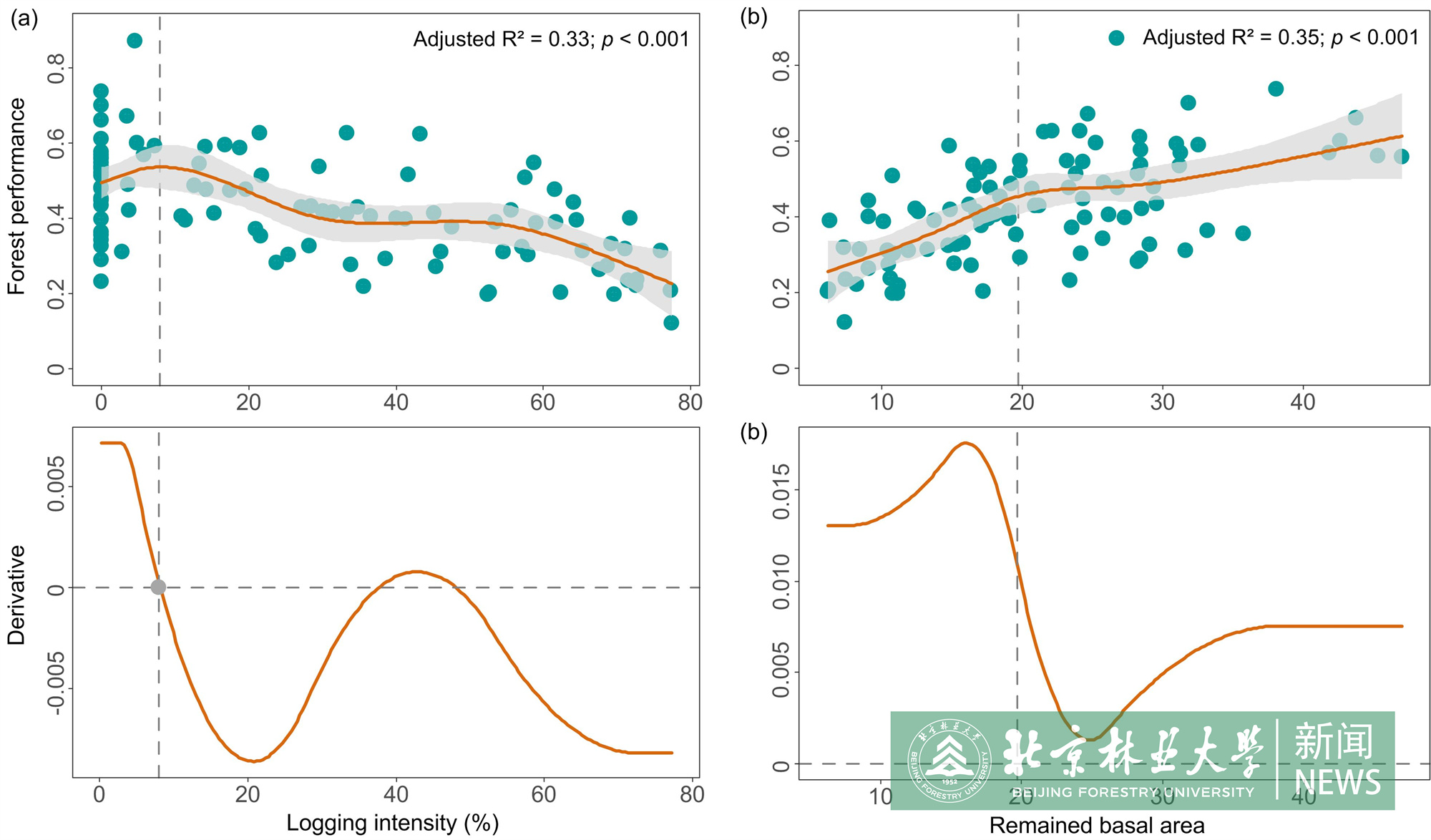
The results demonstrate that forest logging significantly reduced stand density, biodiversity and productivity. Among these factors, the basal area of retained trees—a proxy for vegetation quantity—was the primary determinant of productivity, highlighting the dominant role of the vegetation quantity effect in mediating logging impacts. Low-intensity logging (~8% of basal area removed) may allow a balance between biodiversity conservation and timber production, whereas more severe disturbances were associated with marked declines in both biodiversity and productivity. Additionally, biodiversity and productivity declined sharply when the post-logging basal area dropped from an initial 29.85 m2/ha to below 19.71 m2/ha, suggesting that maintaining sufficient residual stand density is critical for sustaining ecosystem performance.
These findings demonstrate that low-intensity, ecologically informed selective logging may support both biodiversity and productivity in our temperate forests. While specific transition points may vary across forest types and environmental contexts, our study provides a quantitative basis for density regulation and offers a practical reference for sustainable ecosystem management in Northeastern China.
The paper's first author is Associate Professor Hao Minhui, with Professor Zhang Chunyu as corresponding author. The research was supported by the National Natural Science Foundation of China and the National Key R&D Program of China(2023YFF1304001-01).
Paper link: https://doi.org/10.1111/1365-2664.70484
Written by Hao Minhui, Zhang Chunyu
Translated and edited by Song He
Reviewed by Yu Yangyang


